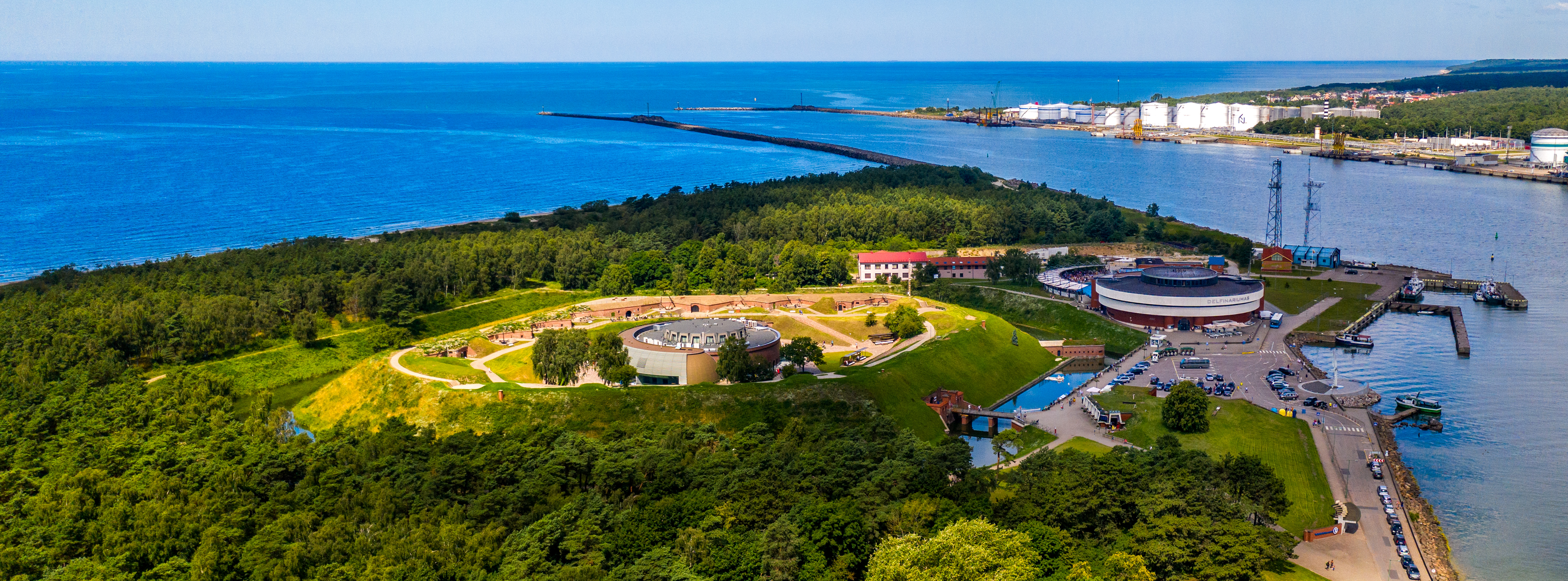
The Baltic Sea Animal Rehabilitation Center, part of the Lithuanian Sea Museum complex, is important not only for the museum, Klaipėda, or Lithuania, but also for all countries bordering the Baltic Sea. The Baltic Sea Animal Rehabilitation Center cares for and treats seals and birds that have been harmed by human activity. The center runs a marine animal research and rescue program, as well as public awareness and education initiatives.
The center’s goal is to care for and treat seals and birds affected by human and agricultural activities, and eventually release them back into the wild. It will implement a marine animal research and rescue system that meets modern scientific and practical standards, conduct research on animal biology, and promote public education and awareness. The Baltic Sea is one of the most polluted seas, and its fate depends solely on our awareness and actions. We can already see how Baltic Sea animals are suffering due to human activity.
Seal pups are being rescued for 30 years
Every year, more than 20 abandoned gray seal pups or injured adult seals are found along the Lithuanian coast. One of the main reasons for this is human activity – fishing, shipping, and marine pollution from plastic or chemicals. Recently, the significant impact of climate change has also been felt.
In Lithuania, injured or sick seals, as well as lost seal pups, are treated at the Lithuanian Sea Museum and, once they have regained their strength, are released back into the Baltic Sea. However, until now, museum staff have cared for the seals without having suitable facilities. The pups were first taken to the administrative building, where two baths have been set up for them in one of the offices.
Gray seals are the largest mammals in the Baltic Sea and are most commonly found along the Lithuanian coast. In addition to them, two other seal species—ringed and harbor seals—and one cetacean—the common porpoise—inhabit the Baltic Sea. The recovering Baltic gray seal population now numbers about 30,000 individuals. Before World War II, there were about 100,000 seals in the Baltic Sea.
Human Activity Is Changing the Baltic Sea
Arūnas Grušas, head of the Marine Mammals and Birds Department at the Lithuanian Sea Museum, who has been rescuing these animals for more than thirty years, says that it is human activity that is changing the Baltic Sea—making it inhospitable to wildlife.
Another reason is the scarcity of fish in the Baltic Sea. It is estimated that 80 percent of the Baltic Sea’s fish stocks have been depleted, so seals are not always able to build up enough energy for the nursing period. The female cares for her pups for only 15 to 20 days; during that time, the pups must grow from 14–15 to 40–50 kilograms in weight thanks to their mother’s very rich milk. If the pups do not gain enough weight, they lack the necessary fat layer, protection from the cold, and energy to swim and feed on their own. The sea washes the exhausted pups ashore. In 2025 alone, as many as 22 such pups ended up in the museum; three could not be saved.
Scientific Research Will Help
Over the past 10 years, the number of seals found dead along the Lithuanian coast has been increasing. More than 200 carcasses have been found in the last four years alone. Examining these carcasses is crucial, as it is the only way to learn more about the state of the Baltic Sea, as emphasized in both the European Parliament and Council’s Marine Strategy Framework Directives and the documents of the Helsinki Commission, which form the basis for the entire legal framework of environmental protection.
These studies are also important because they provide information not only on the state of the Baltic Sea, but also on the health of the seal population and the causes of their deaths. Studies of dead seals are an important part of monitoring, as only continuous and synchronized work by all HELCOM countries can answer questions about the health status of seals. An approach to environmental protection based on European Union standards and concern for specific animals prompted the Lithuanian Sea Museum to collaborate with the Ministry of the Environment. Thanks to this collaboration, partial funding was secured for the construction of the Baltic Sea Animal Rehabilitation Center.
The building of the Baltic Sea Animal Rehabilitation Center was designed by UAB “Archko.” The architects aimed to replicate the forms of the surrounding nature—the dunes—in the building’s silhouette, so it blends very harmoniously into the easily vulnerable landscape of the Curonian Spit.
The main green roof covers an area of 510 m², while the other green roofs will cover 200 m². The center features six indoor pools for the animals, as well as four open-air outdoor pools. The largest pool has a capacity of 280 m³. A special pool has been installed for birds.
The Baltic Sea Marine Animal Rehabilitation Center serves a dual purpose: not only does it treat seals and other marine animals, but it also houses a self-guided educational exhibition titled “I Change – The Sea Changes.”
The concept and content of the exhibition were developed by the museum’s Education Department in collaboration with biologists Vaida Survilienė, Saulius Karalius, and Arūnas Grušas. The visual design was created by the creative studio DADADA and implemented by UAB “Šmikis.”
The exhibition aims to familiarize visitors with the reasons why animals end up at this center and to propose solutions for creating a safer, more sustainable, and cleaner world. This is reflected in its title, “I Change – the Sea Changes.” The exhibition and its furniture were created from panels made of 100% waste, packaging, and microplastics collected from the oceans and seas. The tabletop panels are made from recycled yogurt containers, regenerated medical equipment no longer in use, and similar materials. These panels are combined with plywood scraps and tempered glass. Even the chairs are made from recycled materials—old chairs have been given a second life simply by reupholstering them with new fabric.